

Accessibility menu
Large text
Line spacing
Text spacing
Text alignment
Inversion
Black and white
Saturation
Contrast
Highlighting links
Hide image
Hide video
Cursor
Start of operations
Creation of the Museum
The museum began its activities with an archaeological exhibition in 1899 as the Museum of Antiquities and Arts in an unfinished building on Oleksandrivska Street (now 6 Hrushevskoho Street). The building for the institution was designed by the prominent Kyiv architect Vladyslav Horodetsky, and the funds for its construction were collected by Kyiv residents.
In 1904, the museum was consecrated and solemnly opened under a new name – the Kyiv Museum of Arts, Industry and Science.
In 1909, the archaeological department of the museum had 15 thousand items, the ethnographic department had about 13 thousand, the historical department had over 600, the artistic and industrial department had about 400, and the library had over 1.7 thousand.
Kyiv City Museum, 1911
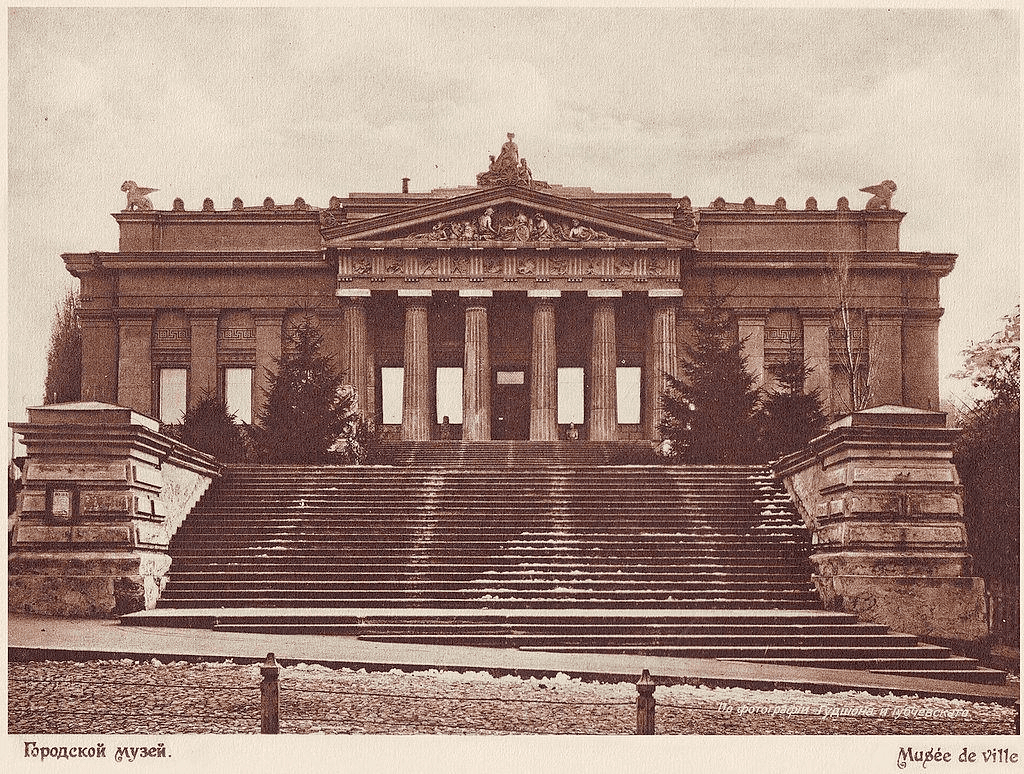
Kyiv City Museum, 1911
Formation of the collection
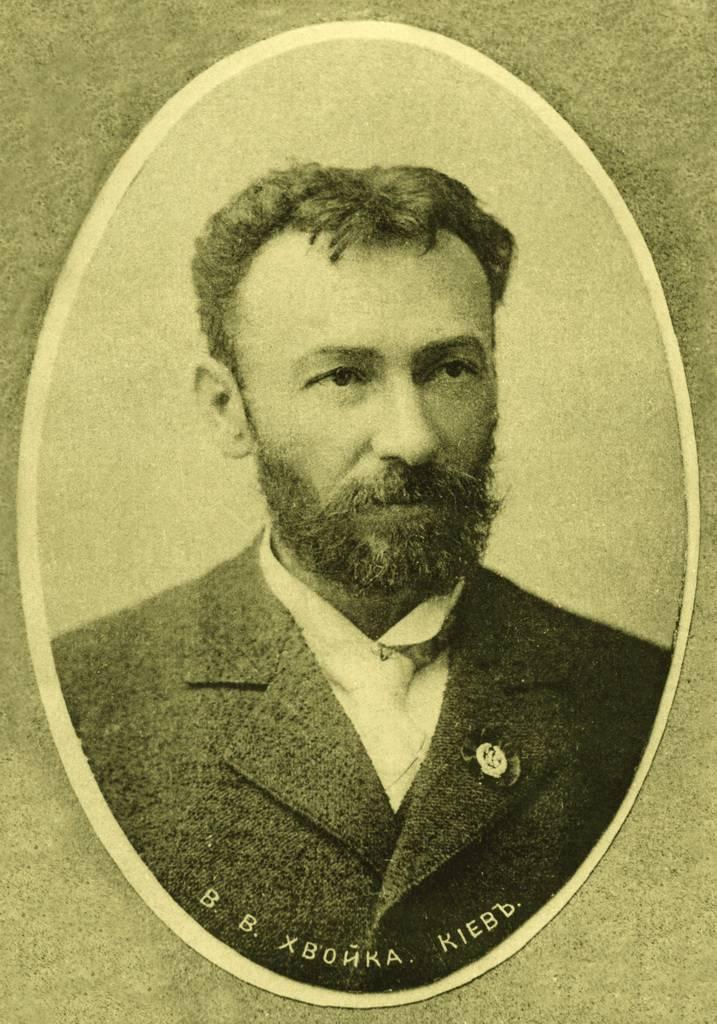
The first thing the museum did was to form an archaeological department, headed by the well-known Ukrainian archaeologist Vikenty Khvoyka.
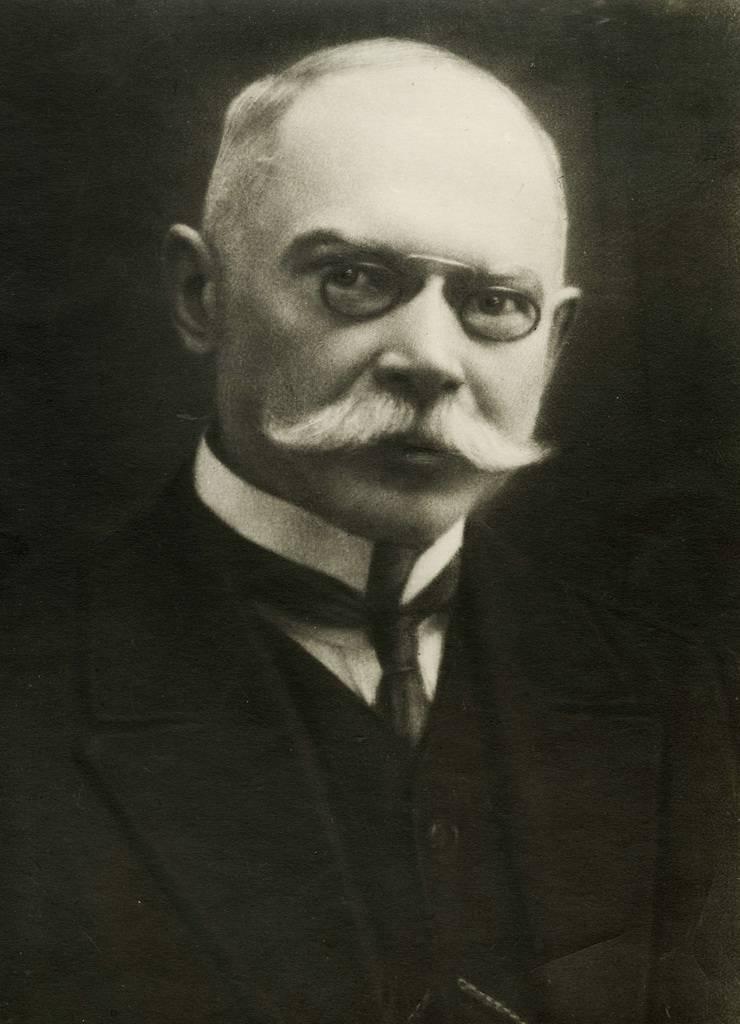
An important role in the formation of the museum’s collection was played by its first director, Mykola Bilyashivsky, appointed in 1902.
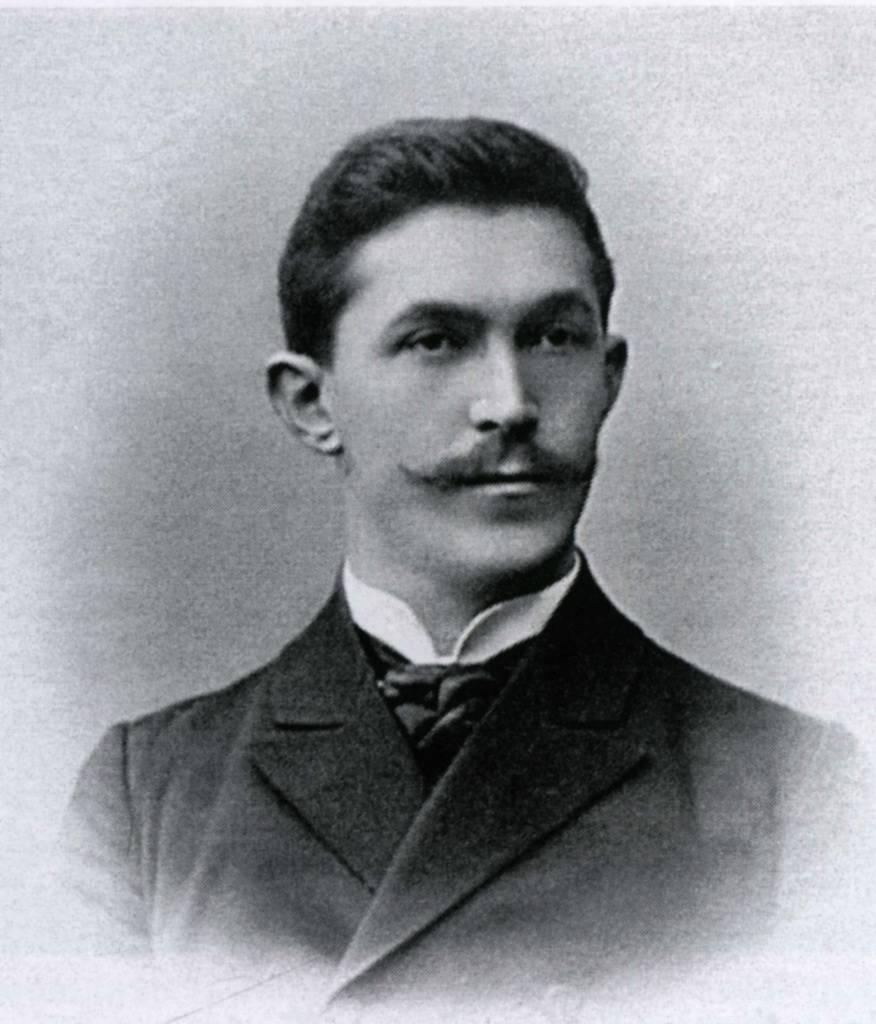
The head of the historical and ethnographic departments, Danylo Shcherbakivsky, significantly replenished the museum collections.
Support from famous patrons
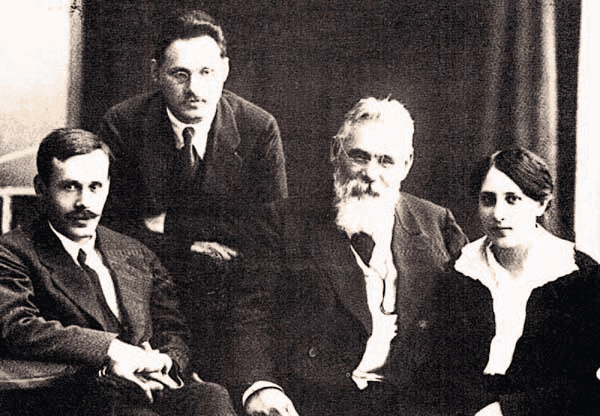
Large landowners and successful industrialists of Tereshchenko financed archaeological expeditions and contributed to the formation of historical and ethnographic collections.
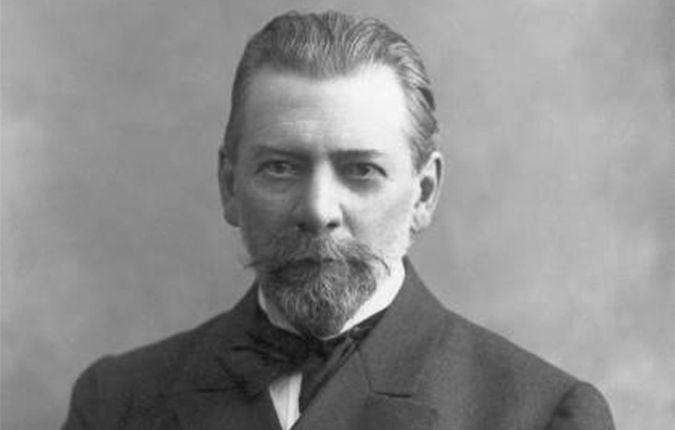
Bogdan and Varvara Khanenko donated their archaeological collection of 3,145 items, valued at 70,000 rubles (more than half the value of all the museum’s exhibits at the time of its opening).
The period of national liberation struggles
With the beginning of the First World War, the museum continued its work – it received visitors, completed its fund collections. Its structure included the archaeological, art and industrial, art, numismatic, historical, ethnographic departments, the “Old Kyiv” department, and a library.
The ideological and educational role of the institution significantly increased during the Ukrainian national liberation struggle. In the spring of 1917, Mykola Bilyashivsky developed a project for the National Ukrainian Museum, which was to be formed on the basis of the Kyiv Art and Industrial and Scientific Museum. This issue was repeatedly considered during the reign of the Central Rada, Hetman Pavlo Skoropadsky, and the Directory. Despite the principled approval of this idea, due to the difficult military-political situation, it was never implemented.
Exposition of the Kyiv Museum of Art, Industry and Science, 1900s.
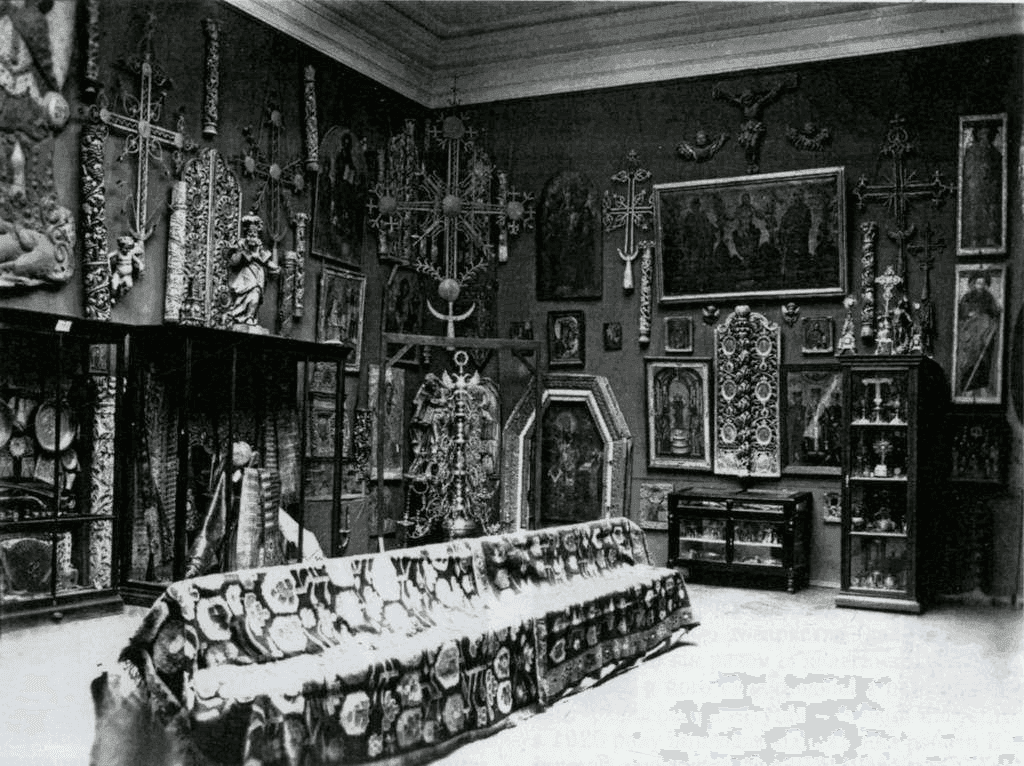
Exposition of the Kyiv Museum of Art, Industry and Science, 1900s.
The seizure of power by the Bolsheviks
After the Bolsheviks seized Ukraine, the process of nationalizing cultural values began. Mykola Bilyashivskyi and Danylo Shcherbakivskyi rescued a huge number of valuable monuments that had entered the museum funds from private collections, churches, monasteries, and looted estates.
On June 23, 1919, the People’s Commissar of the Ukrainian SSR, by a special decree, declared the Kyiv Art, Industrial, and Scientific Museum the property of the state and renamed it the First State Museum. The museum funds were replenished mainly due to the nationalization of private collections.
At the end of 1923, Mykola Bilyashivskyi was removed from his post, and on April 21, 1926, the scientist who transformed the museum from a city museum to a national museum died. The director of the institution was the former Chekist Andriy Vinnytskyi, who began his activities with the intention of freeing the institution from everything “superfluous.” Due to the unbearable atmosphere in the museum, Danylo Shcherbakivsky committed suicide in June 1927.
In 1934, the All-Ukrainian Historical Museum was evicted from its original building, leaving only the exhibits of the art and partly the art and industrial departments. In 1936, the State Ukrainian Museum was established on their basis (since 1939, the Kyiv State Museum of Ukrainian Art). The remaining museum exhibits were transported to the All-Ukrainian Museum Town in the Kyiv Pechersk Lavra and placed in monastery premises unsuitable for storage.
Exposition of the "Kyiv Rus" department of the T. G. Shevchenko Central Historical Museum, 1939 (in the premises of the Lavra Printing House)
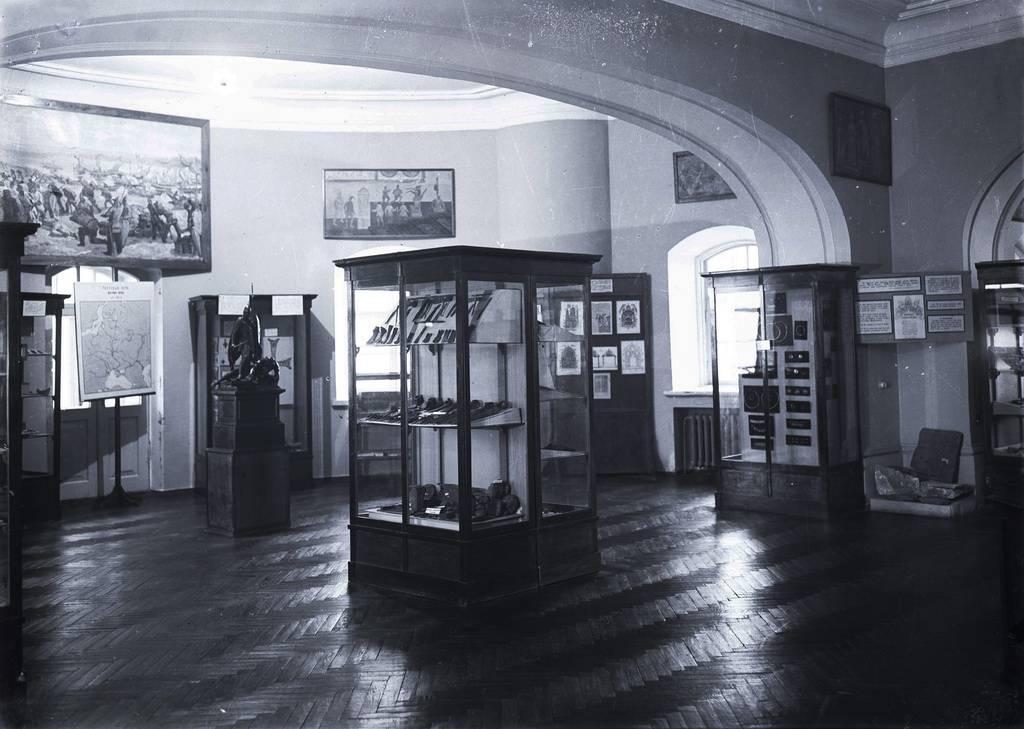
Exposition of the "Kyiv Rus" department of the T. G. Shevchenko Central Historical Museum, 1939 (in the premises of the Lavra Printing House)
World War II
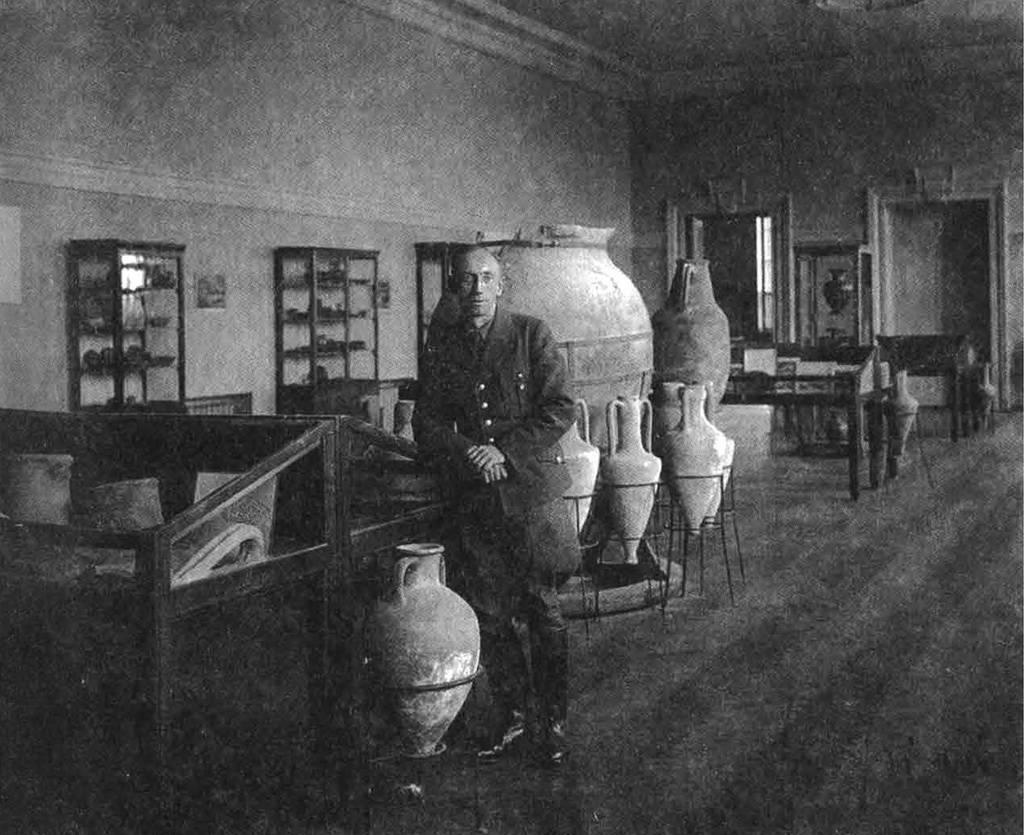
Exposition of the ancient hall of the Regional Museum of Pre- and Early History, 1942. In the photo, German archaeologist Paul Grimm
Evacuation of exhibits
After the start of the German-Soviet war, the most valuable and unique exhibits were evacuated to the city of Ufa (Bashkortostan). They returned to Kyiv in 1947.
The archaeological and ethnographic collections that remained in Kyiv were moved to the Pedagogical Museum (now the city’s Teacher’s House). Other museum collections were transferred to the Ukrainian Museum on Oleksandrivska Street.
In 1942, the archaeological museum was headed by the German archaeologist Paul Grimm, and his deputy was the famous Ukrainian archaeologist Petro Kurinny. In 1942–1943, the institution was called the Regional Museum of Pre- and Early History. A significant part of the valuable museum exhibits were taken to Germany in 1941 and 1943.
Exposition of the ancient hall of the Regional Museum of Pre- and Early History, 1942. In the photo, German archaeologist Paul Grimm
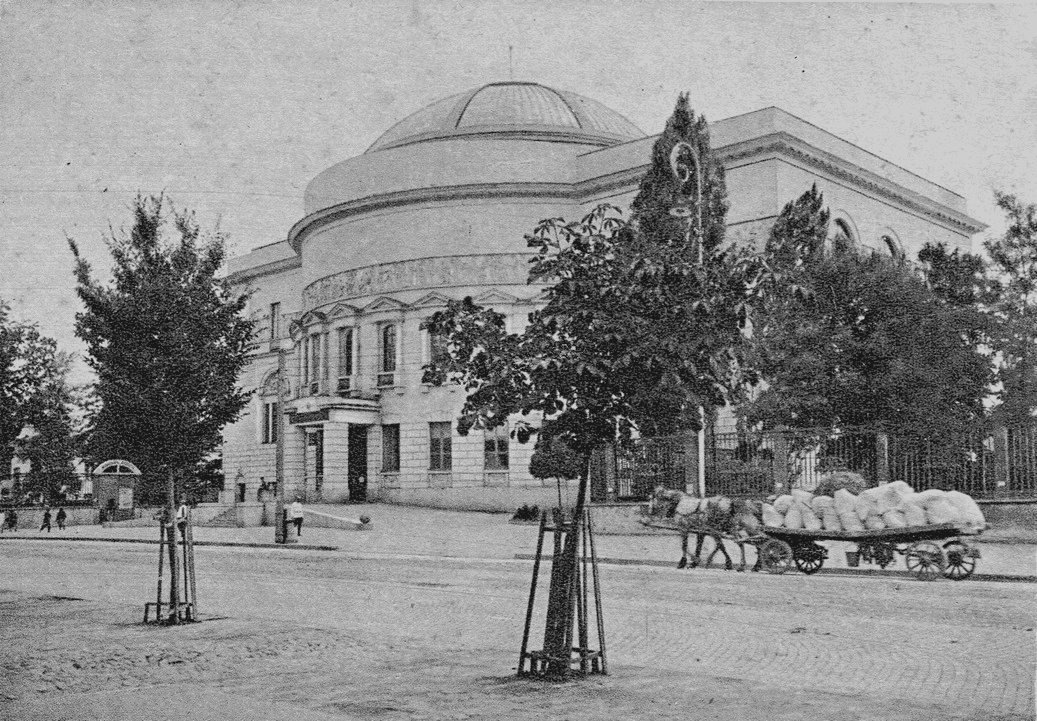
Teacher's house, 1930s
Resumption of work
After the entry of Soviet troops into Kyiv, the museum resumed its work in November 1943. The institution was located in the premises of the Teacher’s House, and some collections were stored in other places in Kyiv.
Teacher's house, 1930s
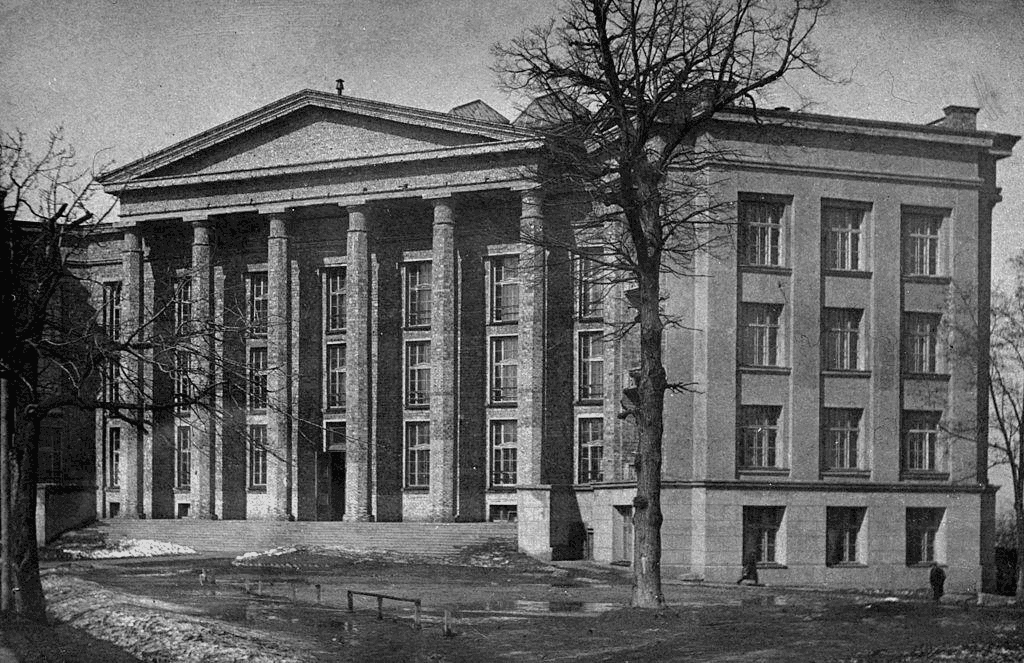
Art School Building, 1940s
Modern Museum Building
In May 1944, the museum was located in the premises where it still operates today, at 2 Volodymyrska Street in the building of the former art school.
The main facade of the building is designed in classical forms and opens onto the area in front of the museum, while the rear resembles Byzantine monumental buildings.
Art School Building, 1940s
Post-war years
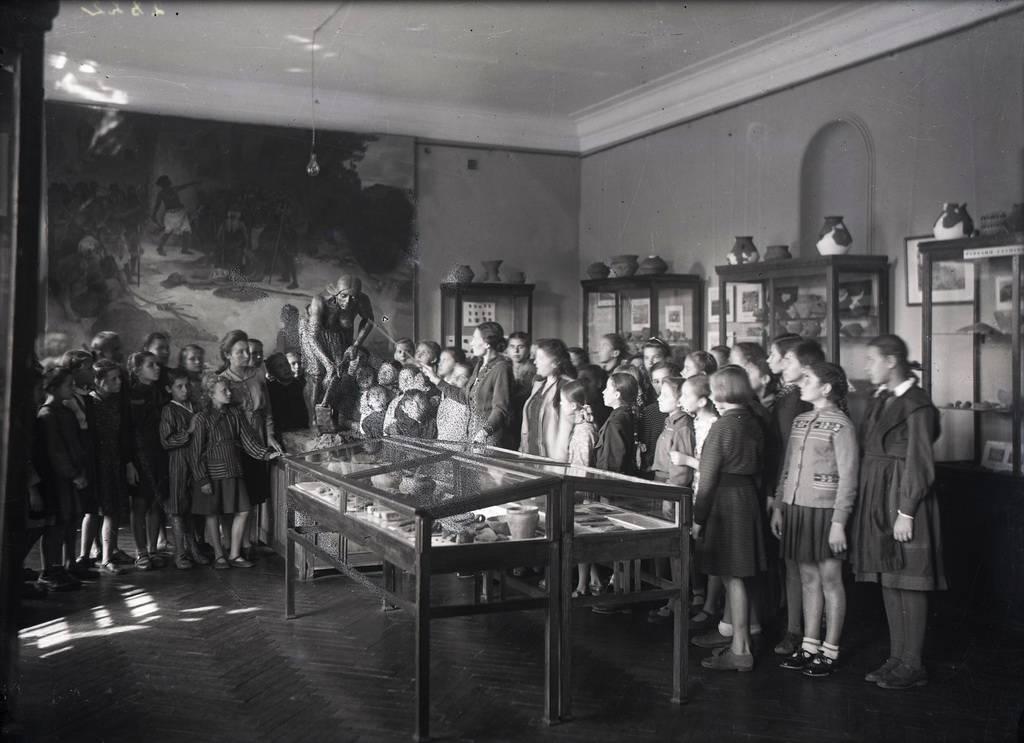
Excursion to the exposition of Trypillian culture of the Kyiv State Historical Museum, 1950s.
Changes in the collection
In the post-war years, the museum staff faced the difficult task of systematizing the re-evacuated materials. The museum was opened to visitors only in 1948.
As a result of the war, the museum collection underwent significant changes – a significant number of unique monuments were lost. Later, the collection was replenished at the expense of other museums – the Lviv Historical Museum, the Lviv Museum of Ukrainian Art, the Odessa Archaeological Museum, the Museum of Ukrainian Art, St. Sophia of Kyiv, the Kyiv-Pechersk Lavra, and the Chernihiv Historical Museum.
Excursion to the exposition of Trypillian culture of the Kyiv State Historical Museum, 1950s.
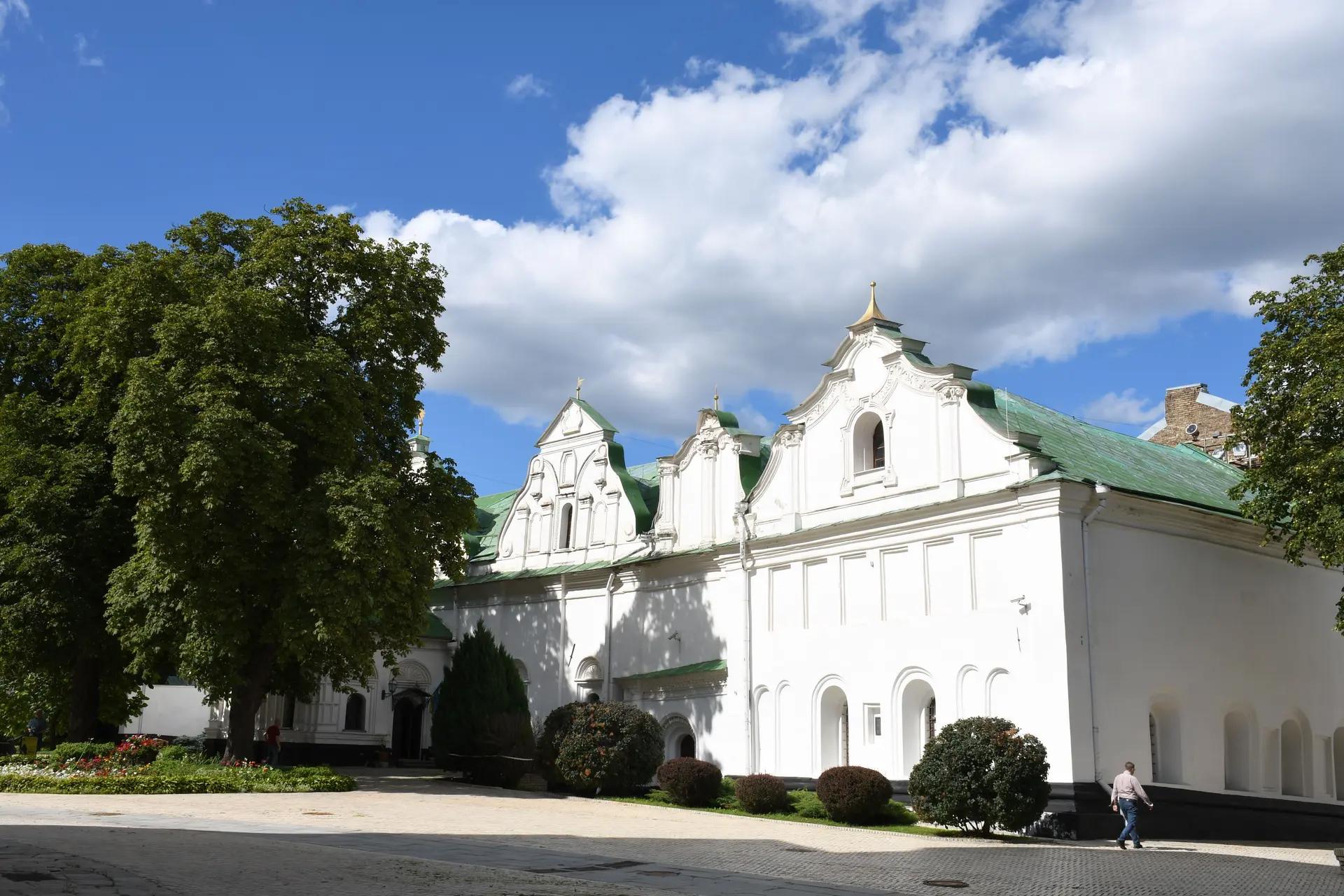
Branch of the institution – Treasury of the National Museum of the History of Ukraine
Creation of a branch
In accordance with the resolution of the Council of Ministers of the Ukrainian SSR of November 22, 1963, a special department “Golden Pantry” was created at the institution, which has been functioning as a branch of the museum since 1965.
The funds of the historical museum became the basis for the creation of its other branches – the museum “Liberation of Kyiv from the Nazi Invaders” (now the National Museum-Reserve “Battle for Kyiv in 1943”); the museum “Kosyy Caponir” (now the museum “Kyiv Fortress”). On the basis of the funds of the institution (25 thousand exhibits), the Ukrainian State Museum of the History of the Great Patriotic War of 1941–1945 (now the National Museum of the History of Ukraine in the Second World War) was founded.
During the “Brezhnev stagnation” period, the institution’s employees focused on collecting materials related to the so-called achievements of the Soviet state. These included work reports of collectives, socialist commitments, Soviet hero complexes, pennants, flags, documents of party congresses, etc. The museum was designed to promote the achievements of socialism, revealing the “leading and guiding” role of the CPSU.
Branch of the institution – Treasury of the National Museum of the History of Ukraine
Restoration of Ukraine's independence
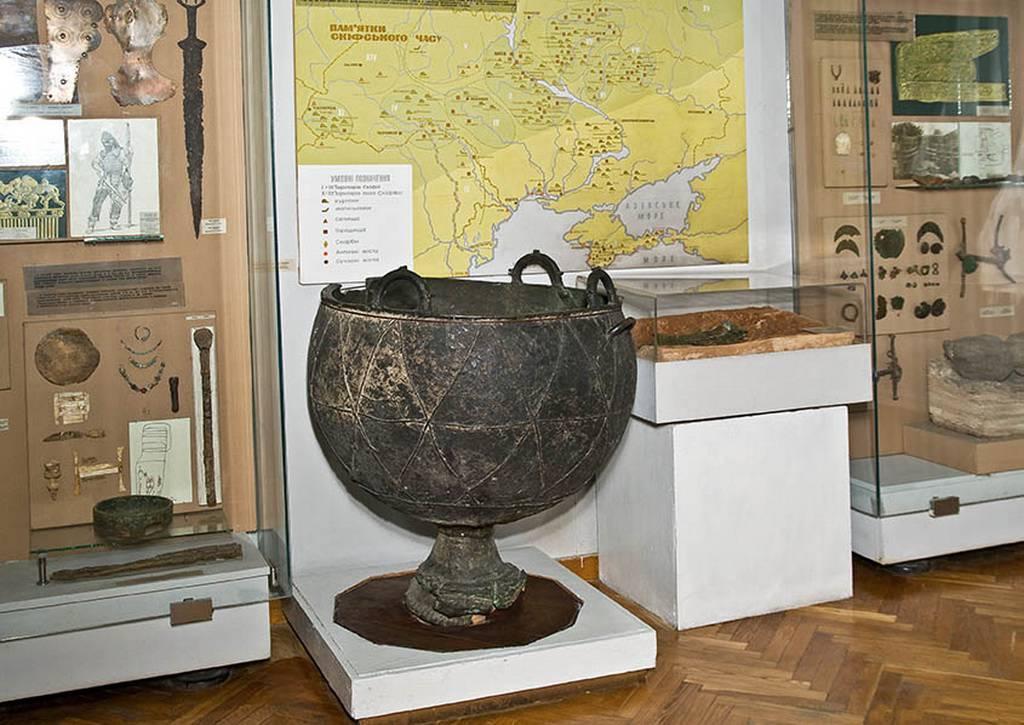
Early Iron Age Hall. 1990s.
Creation of the National Museum of the History of Ukraine
After the restoration of Ukraine’s independence and in accordance with the Resolution of the Cabinet of Ministers of Ukraine dated October 15, 1991, the National Museum of the History of Ukraine was established on the basis of the State Historical Museum of the Ukrainian SSR.
Early Iron Age Hall. 1990s.
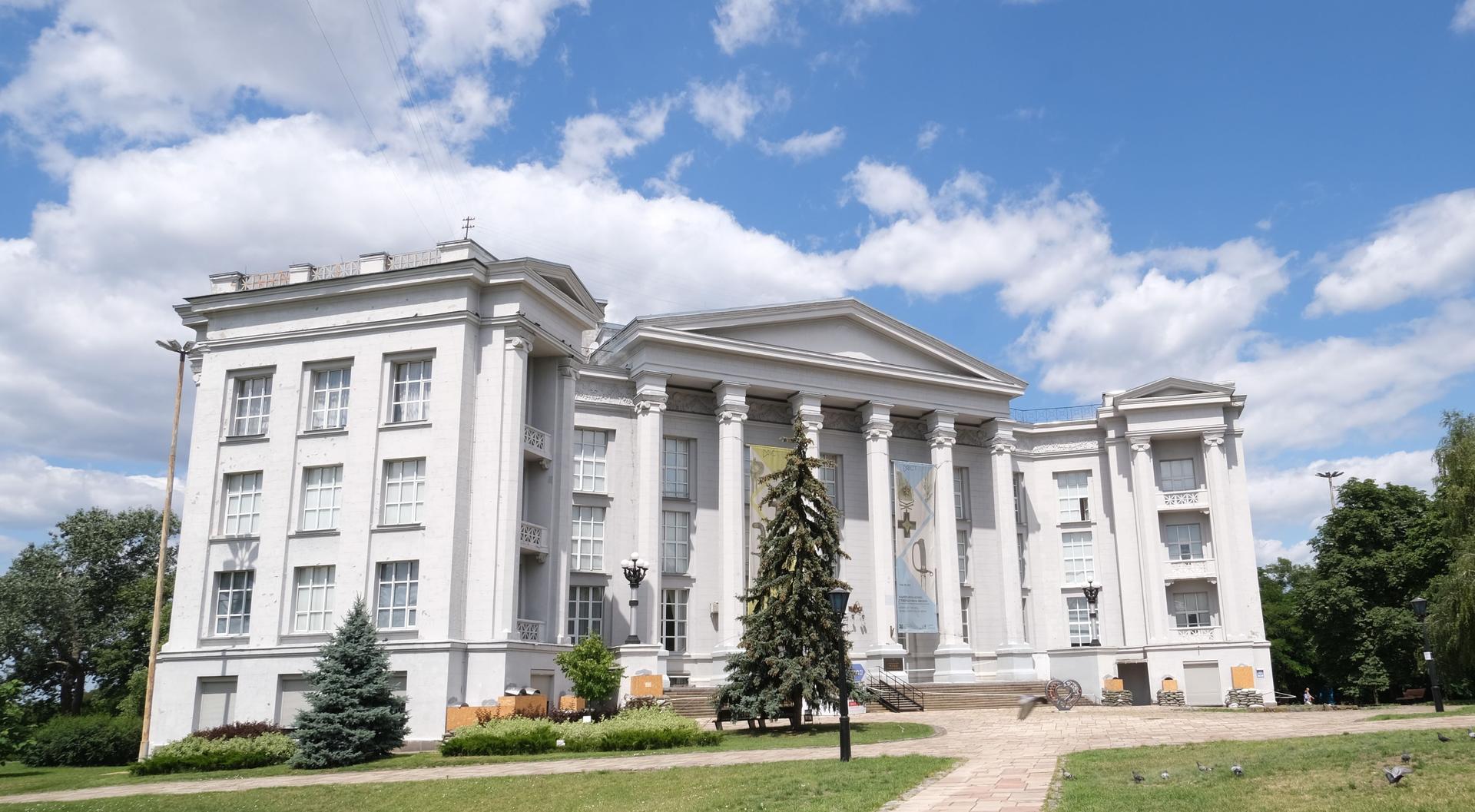
National Museum of the History of Ukraine. Present
Present
Currently, the National Museum of History of Ukraine is one of the leading museums in Ukraine in terms of the number and value of its collections. Its holdings number over 800,000 exhibits. These are world-class archaeological and numismatic collections, ethnographic collections, collections of weapons, monuments of decorative and applied art, manuscripts, old prints, works of painting and graphics, relics of the Ukrainian national liberation movement of the 20th century. They reflect the history of Ukraine from ancient times to the present.
In October 2020, the museum underwent a rebranding, developed by the creative agency TABASCO. One of the important elements of the rebranding is the abbreviation: Museum of History = CITY. The graphic sign of the logo – the letter M, symbolizes that it is in CITY that the past and the future meet, civilizations and knowledge unite. Our bridge connects not only eras, but also people. The museum can open up the history of Ukraine to Ukrainians and the world – make it more understandable and encourage a deeper acquaintance with the country.
National Museum of the History of Ukraine. Present
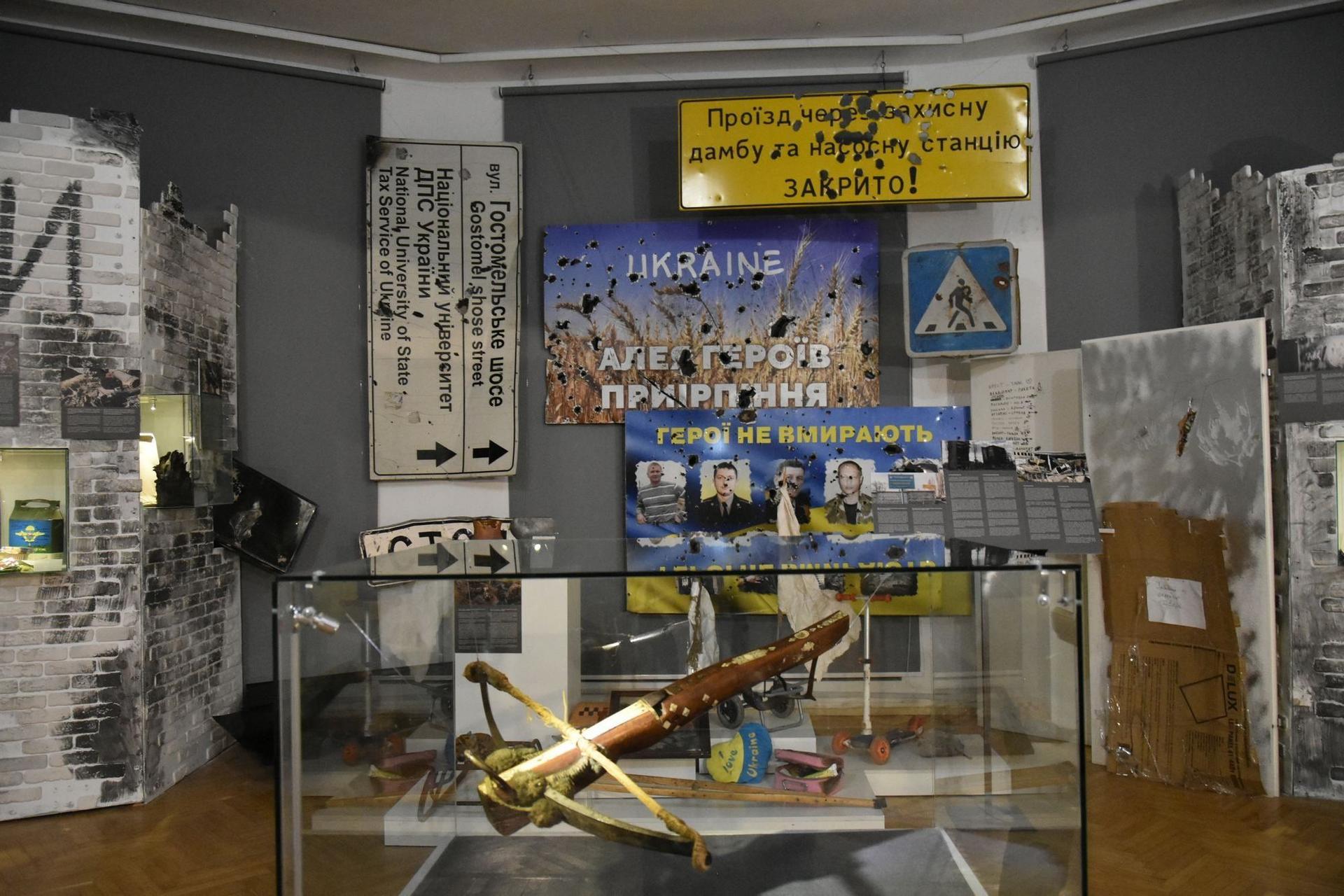
The first exhibition that opened at the museum after the start of the full-scale Russian invasion is "Invasion. Kyiv Shot"
Russian-Ukrainian War
After the full-scale Russian invasion in February 2022, the museum and its branch exhibitions were dismantled and evacuated. Instead, the institution is implementing temporary exhibition projects. Some of the employees joined the ranks of the Ukrainian Defense Forces. Currently, scientists are engaged in collecting materials.
The first exhibition that opened at the museum after the start of the full-scale Russian invasion is "Invasion. Kyiv Shot"
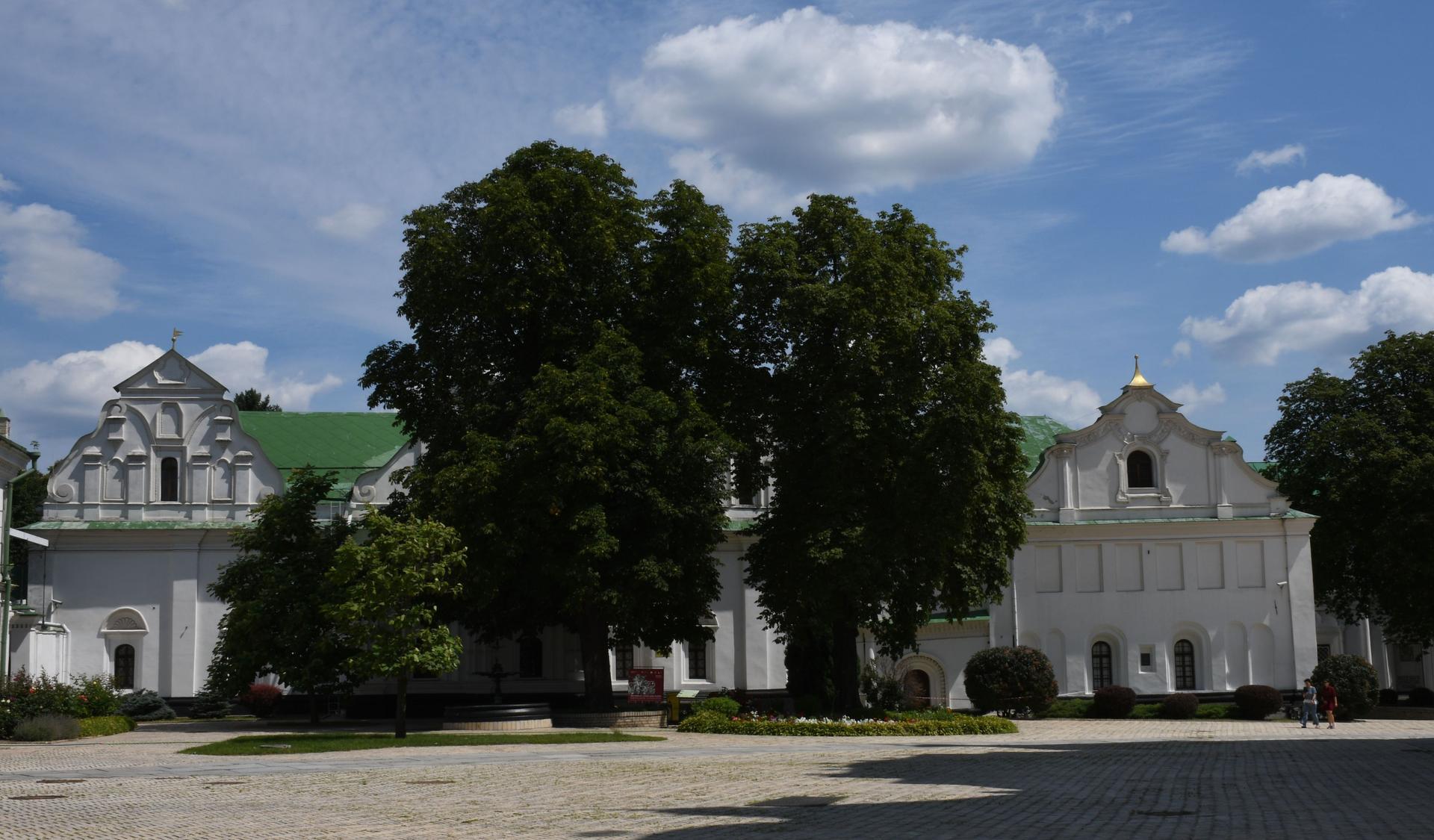
Kovnir building of the Kyiv Pechersk Lavra. Architect Stepan Kovnir. 1746. Now the Treasury of the National Museum of the History of Ukraine
Treasury of the National Museum of History of Ukraine
A branch of the institution is the Treasury of the National Museum of History of Ukraine, which has collected unique materials made of precious metals and gemstones. Of particular value are masterpieces from the collection of the Scythian period, products of masters of the princely era, works of Ukrainian jewelers of the 14th–20th centuries. The collection of Jewish cult silver of the 18th–early 20th centuries is famous in Ukraine and abroad.
Kovnir building of the Kyiv Pechersk Lavra. Architect Stepan Kovnir. 1746. Now the Treasury of the National Museum of the History of Ukraine
The museum has changed its name more than 10 times
-
1899–1904
Museum of Antiquities and Arts
-
1904–1917
Kyiv Art-Industrial and Scientific Museum
-
1917–1919
Kyiv Art, Industrial and Scientific Museum (National Ukrainian Museum)
-
1919–1924
The First State Museum
-
1924–1935
All-Ukrainian Historical Museum named after Taras Shevchenko
-
1935–1941
Central Historical Museum
-
1942–1943
Regional Museum of Pre- and Early History
-
3.11.1943
State Central Historical Museum
-
1944-1945
State Republican Historical Museum
-
1946-1950
State Historical Museum
-
1951–1965
Kyiv State Historical Museum
-
1965–1991
State Historical Museum of the Ukrainian SSR
-
З.10.1991
National Museum of the History of Ukraine